Tendon Training for Speed: The 12-Week Protocol Elite Sprinters Use
You’re getting stronger in the gym, but not faster on the track. You’ve hammered the squats, the power cleans, and the calf raises. Your...
Key Takeaway: 58% of hamstring injuries in competitive sprinters happen in the first 100 hours of the season. The biggest risk factor isn't weakness. It's the sudden jump from preseason conditioning to full-speed sprinting without progressive exposure. Sprinting itself is one of the most powerful protections against hamstring injury, reducing risk by up to 88%, but only when the dose is right. Athletes with shorter biceps femoris fascicles face up to 4x greater injury risk, and the most effective prevention programs combine eccentric strength work with progressive sprint exposure, reducing injuries by 56–94%.
Here's a stat that should make every coach and athlete uncomfortable.
When researchers tracked 44 competitive sprinters over a full season, 58% of all hamstring injuries happened in the first 100 hours of training. Not mid-season. Not during championships. At the very beginning, when athletes were returning to high-speed work after winter training.
The sample was small, but the pattern is hard to ignore. Injuries didn't spread evenly across the year. They clustered heavily at the start, during the transition from preseason conditioning to competition-speed sprinting.
That first real sprint of the outdoor season? Statistically, it's the most dangerous one you or your athletes will run all year.
Being fit and being prepared for what sprinting actually demands aren't the same thing. And the gap between those two things is where hamstring injuries live.
To understand why hamstring injuries happen during sprinting rather than during squats, deadlifts, or conditioning work, you need to understand what the hamstrings are doing at top speed.
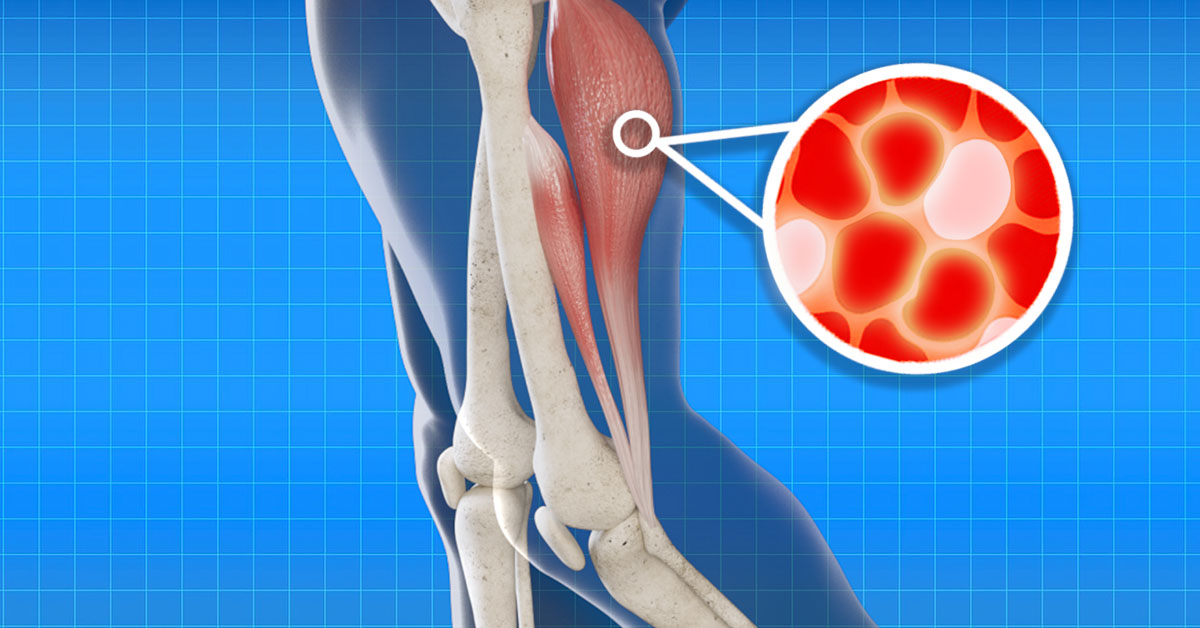
The hamstring group consists of three muscles running down the back of the thigh: the biceps femoris (long and short heads), the semitendinosus, and the semimembranosus. They cross both the hip and knee joints, which means they are responsible for both hip extension (driving the leg backward) and knee flexion (bending the knee).
During sprinting, the most vulnerable moment occurs during the late swing phase, just before the foot strikes the ground. In this fraction of a second, the biceps femoris long head (the most commonly injured of the hamstring muscles) is doing something no gym exercise replicates: it is absorbing force while simultaneously lengthening at extreme speed.
The muscle is contracting eccentrically (producing force while getting longer) to decelerate the lower leg as it swings forward. At top sprinting speed, this happens in roughly 100 milliseconds. The combination of high velocity, long muscle length, and high force is what makes this the injury moment. Ground contact times at top speed last only 80–90 milliseconds, meaning the entire stride cycle is operating on timescales that no conditioning drill or tempo run comes close to replicating.
This is why you can have an athlete who squats twice their bodyweight, passes every strength test, and still tears a hamstring on their first max-effort sprint of the season. The strength is there. The speed-specific preparation is not.
During the off-season and early preseason, most programs build a base. Conditioning. Tempo runs. Strength work. Maybe some acceleration drills at 70–80% intensity.
What they don't do is sprint at 95% or higher.
This creates what researchers call an exposure gap: the mismatch between the demands an athlete has trained for and the demands they are suddenly asked to meet when competition season begins. Your hamstrings don't just need to be strong. They need to be strong at the specific speeds and muscle lengths that full-speed sprinting demands.
Recent research has identified hamstring fascicle length as one of the strongest predictors of injury resilience. Fascicle length refers to the length of the individual muscle fibers within the muscle. Longer fascicles can absorb more force before reaching their failure point, because they have more sarcomeres (the contractile units within each fiber) arranged in series.
Athletes with biceps femoris fascicles below 10.56 centimeters face up to four times greater hamstring injury risk compared to athletes with longer fascicles. This is a measurable, structural vulnerability.
Here's what matters for coaches: fascicle length is trainable, but the type of training matters. Sprint training itself generates approximately 1.6 centimeters of fascicle lengthening. By comparison, Nordic hamstring exercises, the most commonly prescribed prevention exercise, produce only about 0.7 centimeters. Eccentric training performed at long muscle lengths (exercises where the hamstring is loaded in a stretched position, like Romanian deadlifts and long-length slider curls) produces the greatest architectural changes, with recent research showing up to 8.5% fascicle length increases over eight weeks.
The takeaway: when an athlete spends weeks or months without sprinting, their fascicles may shorten, losing the very structural adaptation that protects them. Resuming high-speed work with shortened fascicles is like stretching a rubber band that's lost its elasticity.
Training at short muscle lengths or performing high-volume endurance work (particularly cycling) during the off-season can actually shorten fascicles by 10–15%. This means an athlete who spent the winter on a bike or doing only short-range strength work may return to the track with hamstrings that are structurally less prepared for sprinting than they were at the end of last season, even if their overall fitness has improved.
When you suddenly ask that athlete to hit 95% or higher after weeks without sprint-specific stimulus, you're asking tissue that has lost its high-speed tolerance to perform at its ceiling.
That's not a training plan. That's a coin flip.
This is where it gets counterintuitive.
Most hamstring strains happen during high-speed running. But sprinting, when appropriately dosed, is also the most powerful protection against them.
Malone and colleagues studied elite Gaelic footballers and found that athletes who hit 95% or more of their max sprint speed at least once per week in training had an 88% lower risk of lower-limb injury compared to those who only reached 85% of their max speed.
Athletes who sprinted harder got hurt less.
The reason comes down to adaptations that only sprinting provides, and that no gym exercise can fully replicate.
Structural adaptation: Eccentric exercises like Nordic curls build the foundation by increasing hamstring fascicle length and strength. But sprint training itself produces more than twice the fascicle lengthening of Nordics (1.6 cm versus 0.7 cm). A 2024 breakthrough in lengthened-state eccentric training (exercises performed with the hamstring in a stretched position) showed 19% biceps femoris volume increases compared to just 5% from traditional Nordics.
Neuromuscular adaptation: When you sprint, the activation pattern in the hamstrings, the timing, level, and sequencing of muscle recruitment, is fundamentally different from any strengthening exercise. Sprinting activates the biceps femoris long head more intensely and in a more sport-specific pattern than Nordic curls or any other isolated exercise. Sprint exposure teaches the nervous system to coordinate stiffness, rhythm, and force production at speeds that gym work never approaches.
Elastic energy training: At top speed, ground contact lasts only 80–90 milliseconds. In this window, elastic energy storage and return from tendons becomes critical. Sprinters develop significantly greater muscle-tendon stiffness than endurance runners (studies show 73% higher vertical leg stiffness in sprinters). This stiffness is protective: it allows the muscle-tendon unit to absorb and release energy rapidly without exceeding its structural limits. You can only develop this stiffness through high-speed running.
A 2025 scoping review synthesized the available evidence and found that combining eccentric training with progressive sprint exposure reduced hamstring injuries by 56 to 94%.
The catch? The dose matters enormously.
The relationship between sprint exposure and hamstring injury follows a U-shaped curve: both extremes are dangerous and the middle is protective.
Most of the dose-response data comes from team sports with GPS tracking, but the pattern is consistent across sports. Colby and colleagues found that Australian footballers with very low sprint exposure (0–8 sessions above 85% max speed) and very high exposure (15+ sessions) both had elevated injury risk. The protective sweet spot was moderate and consistent: around 11–12 sessions.
Too little and you're unprotected. Too much too fast and you overwhelm the system.
The acute-to-chronic workload ratio (ACWR) is a measure that compares the training load from the current week to the average load over the previous four weeks. It quantifies how rapidly training demands are changing.
When that ratio exceeds 1.5, meaning this week's high-speed running volume is 50% greater than the recent four-week average, injury risk increases two to four times. Duhig and colleagues found that in AFL footballers, a sudden spike in high-speed running increased hamstring injury odds by 6.4 times the following week.
This is the exact pattern that plays out every early season in track and field. Athletes spend weeks building fitness through conditioning, tempo runs, and strength work. Their chronic workload for high-speed sprinting is essentially zero. Then coaches introduce full-speed work, and the acute workload spikes from nothing to significant volume in a single week.
That spike is precisely the loading pattern most likely to cause injury. The hamstrings haven't had time to build the chronic tolerance needed to handle the new demand.
The solution isn't to avoid sprinting. It's to build chronic sprint exposure gradually so that when competition arrives, the body treats max-effort sprinting as familiar rather than shocking.
The fix isn't complicated. It's progressive.
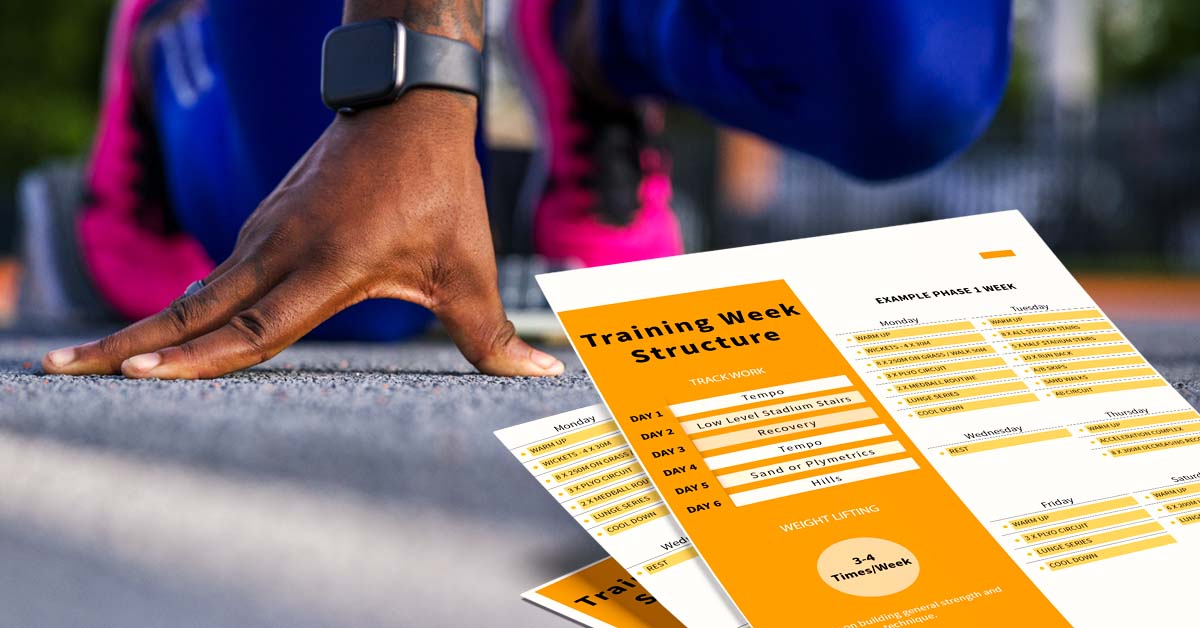
This protocol bridges the gap between preseason conditioning and competition-speed sprinting over four weeks. The goal is to build chronic sprint exposure gradually so that tissue tolerance, fascicle length, neuromuscular coordination, and energy system capacity all catch up before an athlete is asked to race.
Week 1: Reintroduce (70–75% intensity)
Short accelerations only: 20–30 meters. Four to six reps with full recovery between each (at least 3 minutes). This isn't speed development. It's tissue reintroduction. The hamstrings need to experience sprinting forces again at submaximal speeds before anything else. Keep the distances short enough that athletes never reach true top speed.
Week 2: Extend (80–85% intensity)
Push distances to 40–50 meters. Add curved runs if your athletes race bends. Six to eight reps with full recovery. Athletes will feel eager to go faster at this stage. Hold them back. The tissue adaptations you're building, increased fascicle length, improved neuromuscular coordination, tendon stiffness, need accumulated exposure, not a single hard session.
Week 3: Challenge (90–95% intensity)
Full sprint distances at competition-level speeds, but not full competition volume. Six to ten reps with generous recovery (5–6 minutes between reps at this intensity). This is where real speed work begins. Athletes should be timing reps to verify they're hitting target velocities without decay across the session.
Week 4: Compete (95–100% intensity)
Race-specific volumes and intensities. Reduce total volume slightly as intensity peaks. By now, a max-effort sprint is the next logical step in a progression, not a cold shock to unprepared tissue.
The cardinal rule: increase intensity or volume in a given week, never both.
A practical check that many sprint coaches use: once times slow by roughly 2–3% from the best rep of the day, either extend recovery or shut the session down. Without a timing system, watch for visible deceleration in the last 10–20 meters. That's the signal that quality has dropped below the threshold where the training is productive. This is especially important with max velocity training and block starts.
Nordic hamstring curls have become the default hamstring injury prevention exercise in most sports. They are valuable: they build eccentric hamstring strength and produce meaningful fascicle length gains. But for sprinters specifically, they have significant limitations.
The Nordic curl loads the hamstring in a relatively short position (the knee is the primary joint moving, and the hip stays relatively extended). During sprinting, the critical injury moment occurs when the hamstring is at a long length, near full hip flexion with the knee extending. The positions don't match.
Research from 2024 demonstrates the gap clearly. Lengthened-state eccentric training (exercises that load the hamstring while it's in a stretched position) produces 19% biceps femoris long head volume increases, compared to just 5% from traditional Nordic curls. The total hamstring growth difference is similarly dramatic: 18% versus much smaller gains from the Nordic alone.
This doesn't mean you should abandon Nordics. They still build eccentric strength effectively. But they should be part of a program that also includes long-length loading exercises (Romanian deadlifts, single-leg stiff-leg deadlifts, long-length slider curls) and progressive sprint exposure. The combination is what produces the 56–94% injury reduction the research supports, not any single exercise.
The 4-week ramp-up works best when layered on top of three things that should already be established in your program at least four weeks before the first sprint session.
Eccentric hamstring exercises are movements where the hamstring muscles lengthen under load, mirroring the demands of the late swing phase in sprinting. Nordic curls, Romanian deadlifts, and slider curls are the most common options.
Start these at least four weeks before your first sprint session. This gives enough time for the initial fascicle length adaptations to take hold. Two to three sessions per week, progressing from lower intensity to full effort over the four-week period.
For sprinters specifically, prioritize exercises that load the hamstring at longer muscle lengths over short-range movements. Romanian deadlifts and single-leg stiff-leg deadlifts challenge the hamstrings in a stretched position, which more closely matches the demands of the sprint stride and produces greater fascicle length adaptation.
This overlaps with eccentric work but deserves emphasis as a separate priority. Exercises that challenge the hamstrings in a stretched position rebuild fascicle length that is lost during detraining.
Why this matters: each 10% increase in fascicle length produces approximately 4.7% sprint speed improvement, and longer fascicles are more resistant to strain injury. Fascicle length is the most modifiable architectural parameter for both sprint performance and injury prevention. Athletes who spend the off-season doing only short-range hamstring work (seated leg curls, cycling) may actually shorten their fascicles, increasing vulnerability.
Romanian deadlifts, single-leg stiff-leg deadlifts, and hip-dominant hinge patterns performed through full range of motion are the primary tools here.
Research shows that gluteus maximus size alone correlates with up to 44% of sprint performance differences. The glutes are the primary hip extensors during sprinting. If they aren't firing effectively, your hamstrings absorb the extra load during hip extension, taking on a job they aren't built to handle alone.
Hip thrusts, heavy step-ups, and sled pushes all develop the hip extension power that distributes load away from the hamstrings. A weak or inhibited glute max doesn't just limit performance, it directly increases hamstring injury risk by forcing the hamstrings to compensate.
The most compelling long-term evidence for hamstring prevention comes from consistency, not any single intervention.
Sugiura and colleagues tracked 613 collegiate sprinters over 24 years under one coaching staff. As they progressively evolved their prevention program from strength-only (period one: 1988–1991) to strength plus agility (period two: 1992–1999) to strength, agility, flexibility, and eccentric work (period three: 2000–2011), hamstring injuries dropped from 16 per 116 athletes to just 2 per 299 athletes. That's a reduction in incidence rate from 137.9 to 6.7 per athlete-seasons.
The athletes who got hurt weren't the ones who sprinted the most. They were the ones who sprinted inconsistently.
The practical recommendation: aim for one to two exposures per week at near-max speed when healthy, even during heavier training phases. Year-round. Even during general preparation phases and exam breaks and holidays. Inconsistency is the setup for the dangerous workload spikes that cause injuries.
If an athlete can't sprint due to facility access or weather, high-speed running alternatives (steep hill sprints, sled sprints) can maintain some degree of high-velocity exposure. The goal is to prevent the chronic sprint workload from ever dropping to zero, because rebuilding it from zero is where the injuries happen.
Sprint smart. Sprint progressively. And don't let the first rep of the season be the one that takes you or your athlete out of it.
Hamstring injuries in sprinters are not random bad luck. They follow predictable patterns tied to exposure gaps, workload spikes, and structural vulnerabilities that are identifiable and fixable. A 4-week ramp-up, built on a foundation of eccentric strength, long-length loading, and hip extension power, costs almost nothing to implement and addresses the window where the majority of season-ending injuries occur.
The research is clear: the athletes who stay healthy are not the ones who avoid sprinting. They are the ones who sprint consistently, progressively, and with respect for what their tissue needs before it can handle what their ambition demands.
Sources: Yeung et al. (2009) British Journal of Sports Medicine; Malone et al. (2017) Journal of Science and Medicine in Sport; Duhig et al. (2016) British Journal of Sports Medicine; Colby et al. (2018) International Journal of Sports Physiology and Performance; Gabbett (2016) British Journal of Sports Medicine; Sugiura et al. (2017) Orthopaedic Journal of Sports Medicine; Tedeschi et al. (2025) Applied Sciences; Miller et al. (2021) Medicine and Science in Sports and Exercise; Buckthorpe et al. (2019) British Journal of Sports Medicine; Timmins et al. (2016) Medicine and Science in Sports and Exercise; Presland et al. (2024) Scandinavian Journal of Medicine & Science in Sports; Kubo et al. (2020) Journal of Human Kinetics.